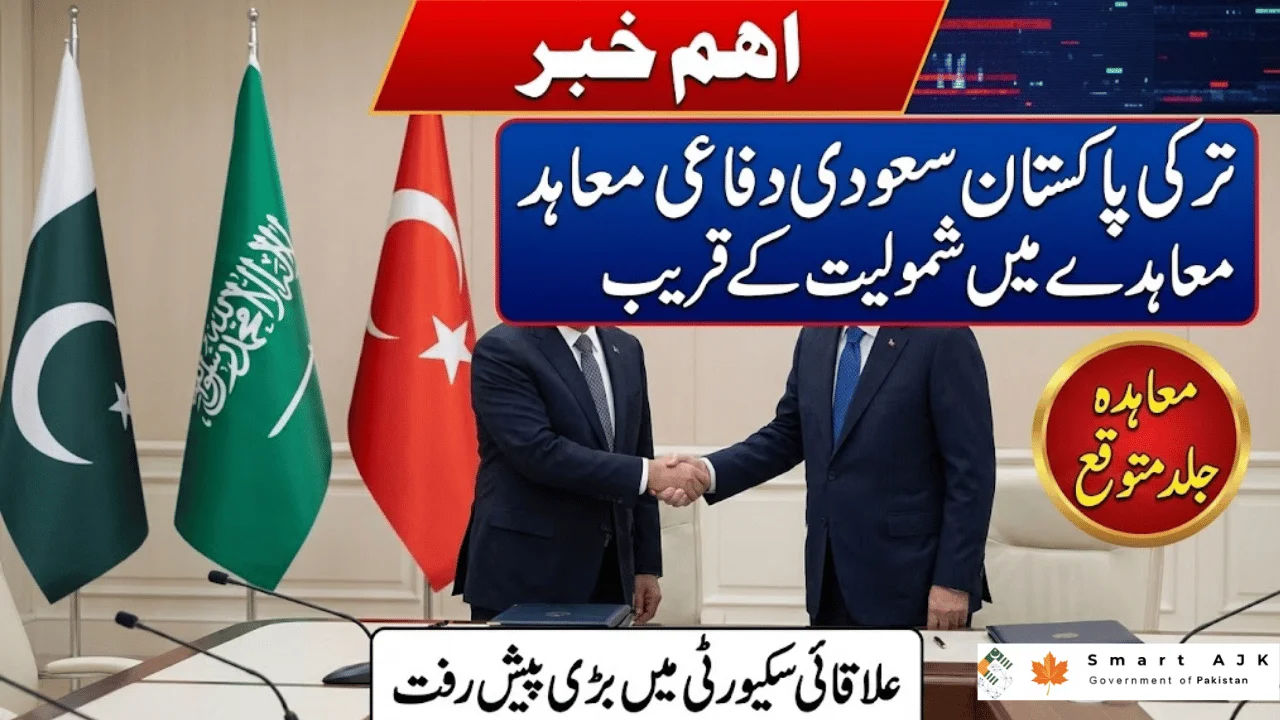
Diplomatic and defence circles are closely watching a developing regional alignment as Turkiye signals strong interest in joining a mutual defence pact between Pakistan and Saudi Arabia. According to officials familiar with the discussions, negotiations have progressed significantly, and an agreement is now considered highly likely.
What the existing pact covers
Pakistan and Saudi Arabia formalised a strategic mutual defence agreement last year, committing both countries to treat any external attack on one as an attack on the other. The arrangement focuses on collective security, intelligence coordination, and defence preparedness rather than joint military deployments.
If Turkiye joins, the pact would evolve from a bilateral understanding into a broader security framework spanning South Asia and the Middle East.

Why Turkiye is interested
Ankara’s interest reflects shifting global and regional realities. With growing uncertainty around long-standing security guarantees from Western allies, Turkiye is looking to strengthen ties with countries that share overlapping strategic interests. Pakistan and Saudi Arabia offer complementary strengths—Islamabad brings military capability and manpower, while Riyadh contributes economic weight and regional influence.
From Turkiye’s perspective, deeper defence cooperation also aligns with its expanding defence industry and growing role as a regional security actor.

How defence cooperation already fits in
Turkiye already maintains strong defence links with Pakistan, including naval projects, aircraft modernisation, and drone collaboration. With Saudi Arabia, defence and security ties have been improving steadily after years of cautious engagement. Recent military-to-military contacts and joint discussions suggest momentum is building beyond diplomacy.
Bringing all three countries into a single defence understanding would formalise cooperation that, in many ways, already exists on the ground.

Regional implications
A trilateral defence alignment could reshape security calculations in parts of the Middle East, South Asia, and beyond. Analysts note that such cooperation is driven less by confrontation and more by deterrence and strategic balance, particularly as regional conflicts and power rivalries continue to evolve.
At the same time, officials have remained careful in public statements. Neither Ankara nor Riyadh has issued formal confirmation, underlining that talks are still sensitive.

What happens next
If the agreement moves forward, it would mark a significant step in Pakistan–Saudi–Turkiye relations, signalling closer coordination on defence, technology, and regional security planning.
Quick FAQ
Is the deal final?
Not yet. Talks are advanced, but official confirmation is still awaited.
Would this mean joint military operations?
No such plans have been announced. The focus is on mutual defence and coordination.
For now, all signs point toward a potentially major defence partnership taking shape—one that reflects changing alliances in an increasingly uncertain world.





This article is published for informational and educational purposes only. nise.org.pk is not an official government website and is not affiliated with any government department. Readers are advised to verify all information from official sources before taking any action.