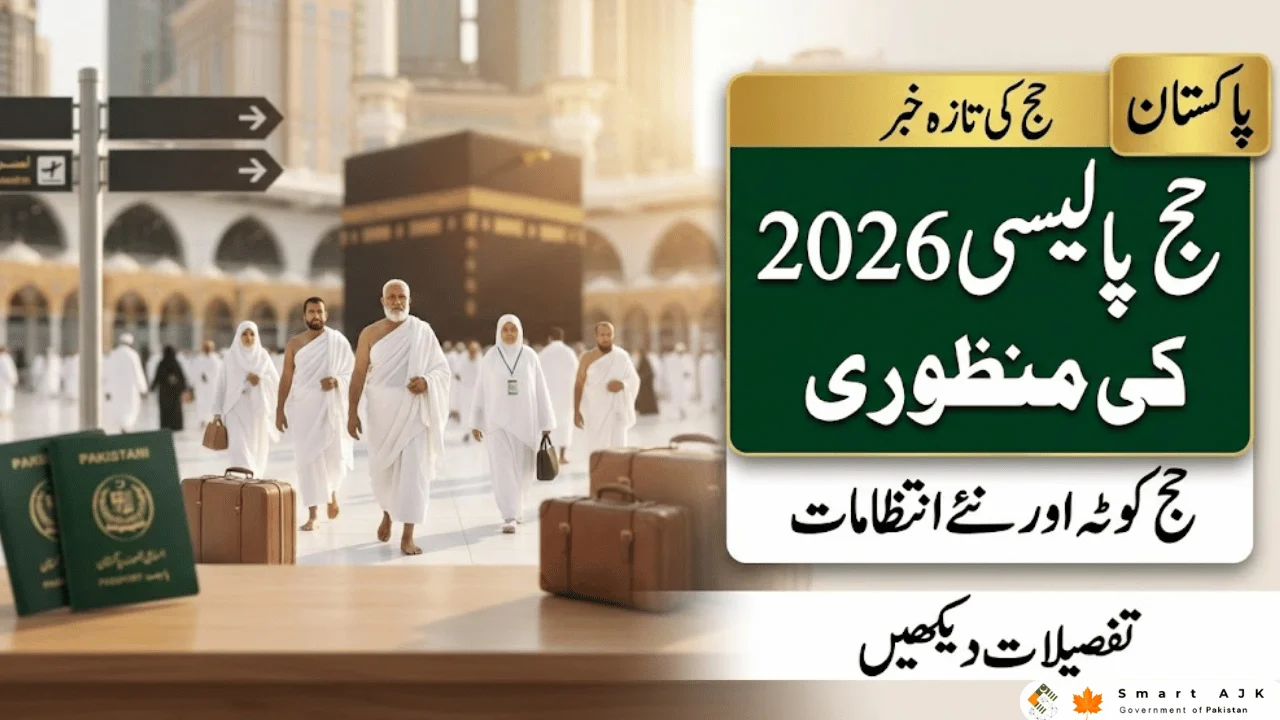
Pakistan has formally approved its Hajj Policy for 2026, aligning national arrangements with guidelines issued by Saudi Arabia. The decision brings clarity for thousands of intending pilgrims as preparations begin well ahead of next year’s pilgrimage season.
According to Sardar Muhammad Yousaf, Federal Minister for Religious Affairs and Interfaith Harmony, Pakistan’s total Hajj quota for 2026 has been finalized at 179,210 pilgrims.
Government and Private Hajj Quota Breakdown
Under the approved framework:
-
Around 120,000 pilgrims will perform Hajj under the government scheme

-
Approximately 60,000 pilgrims will travel through private Hajj operators
This distribution is aimed at maintaining balance between affordability, service quality, and operational capacity.
Mandatory Hajj Training Underway
Nationwide Hajj training sessions have already begun and are mandatory for all registered pilgrims. These sessions focus on rituals, health guidance, and travel procedures to ensure pilgrims are well-prepared before departure.

Expansion of Road to Makkah Facility
A key highlight of the policy is the continued use of the Road to Makkah initiative. Under this facility, pilgrims complete Saudi immigration procedures before leaving Pakistan.
-
About 38,000 pilgrims will depart from Islamabad under this program
-
The service is currently available in Islamabad and Karachi

-
Authorities are working to extend it to Lahore
This initiative significantly reduces waiting times upon arrival in Saudi Arabia.
Broader Religious Affairs Initiatives
The minister also reiterated the government’s commitment to interfaith harmony, noting constitutional protections for minority communities. Ongoing initiatives include scholarships for minority students, funding for worship place rehabilitation, financial assistance programs, and reserved representation in public institutions.

Additionally, a new centralized system has been introduced to better organize pilgrimages by Zaireen to holy sites in Iran and Iraq, aiming to improve coordination and safety.
With early approval of the Hajj Policy 2026, authorities say the focus is now on smooth implementation, transparency, and improved services to ensure a dignified and well-managed pilgrimage experience for Pakistani pilgrims.



This article is published for informational and educational purposes only. nise.org.pk is not an official government website and is not affiliated with any government department. Readers are advised to verify all information from official sources before taking any action.