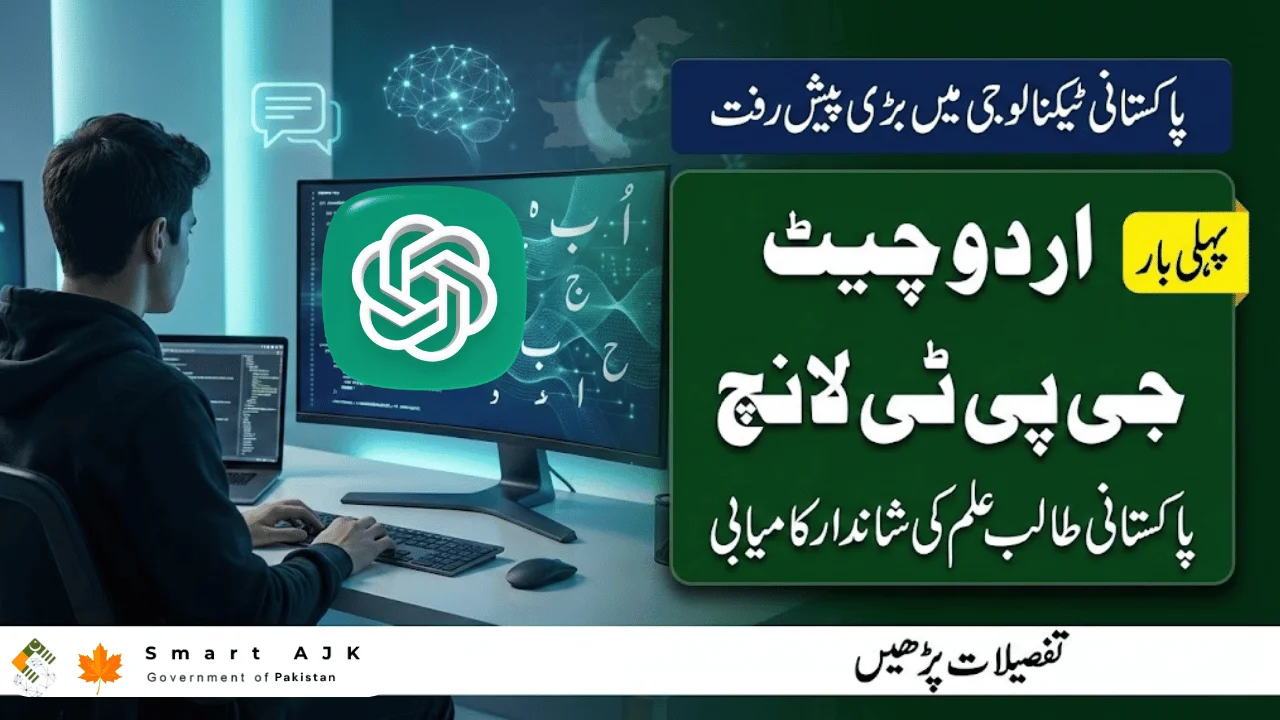
Pakistan has taken a meaningful step into the global AI race with the launch of its first advanced Urdu-focused language model, built entirely around the national language. The project, named Qalb, is being described by experts as a ChatGPT-style system for Urdu, created to serve millions of native speakers who have long been underserved by modern AI tools.
This development is not just a technical milestone—it signals a shift toward language inclusion in artificial intelligence.
What Is Qalb and Why It Matters
Qalb is a large language model developed exclusively for Urdu, designed to understand, generate, and respond in natural, context-aware Urdu. Unlike earlier tools that relied on limited translations or mixed-language datasets, this model was trained from the ground up to reflect how Urdu is actually written and spoken.
With nearly 230 million Urdu speakers worldwide, the lack of high-quality AI support in the language has been a major gap—one Qalb aims to close.
Who Built It?
The model was developed by Taimoor Hassan, a Pakistani student currently pursuing advanced studies in computer science in the United States. Despite his young age, he brings significant experience to the project, having previously worked on multiple startups and represented Pakistan at international technology platforms.
Qalb was built with support from a small team of collaborators, proving that world-class AI innovation is no longer limited to tech giants or massive budgets.
How Powerful Is the Model?
According to its developers, Qalb was trained on nearly two billion Urdu-language tokens and evaluated using multiple international benchmarking frameworks. Early results show that it outperforms existing Urdu AI systems in real-world tasks such as:
This makes it one of the most capable Urdu AI models ever developed.
Real-World Uses of Urdu AI
The potential impact of Qalb goes far beyond experimentation. Developers say the model is designed to support:
-
Education platforms using Urdu as the primary medium
-
Local startups and businesses
-
Voice-based AI assistants
-
Customer support and automation tools
-
Digital public services
By enabling AI in Urdu, the model opens the door for wider adoption of technology across Pakistan, especially among users who are not fluent in English.
A Bigger Message for Pakistan’s Tech Future
The launch of Qalb sends a clear message: innovation can come from small, focused teams, and meaningful technology can be built with local needs in mind. It also highlights the growing role of Pakistani developers in shaping next-generation AI tools.
As the team continues refining the model, Qalb could become the foundation for Urdu-first digital ecosystems, helping Pakistan move toward more inclusive and accessible technology.
Bottom Line
The debut of Qalb marks a historic moment for Urdu and artificial intelligence. By bringing advanced AI capabilities to the national language, a young Pakistani developer has shown that global-level innovation is possible—with vision, skill, and purpose.
This is not just an AI launch. It’s a step toward bridging the language gap in the digital world.