The federal government has announced significant electricity tariff relief for multiple consumer sectors starting in fiscal year 2026, marking one of the most notable power-sector adjustments in recent years. While the base electricity tariff remains unchanged, targeted reductions aim to ease costs for industry, agriculture, commercial users, and other key segments of the economy.
This decision reflects a balancing act between consumer relief and the financial stability of the power sector.
Base Tariff Decision Explained
The National Electric Power Regulatory Authority had recommended a modest reduction in the base tariff following its annual review. However, the federal government chose to maintain the existing base tariff for 2026, citing sustainability concerns for distribution companies and the broader power system.
Instead of across-the-board cuts, relief has been delivered through sector-specific tariff reductions.
Major Relief for Industrial Consumers
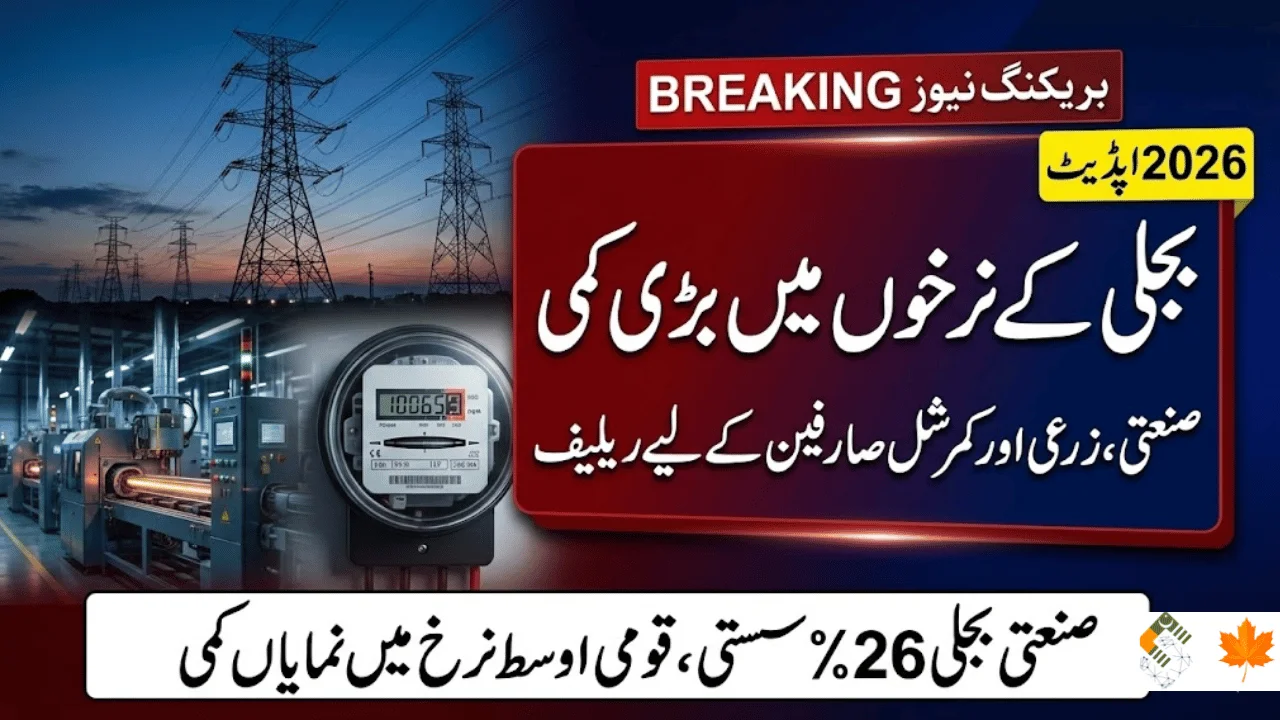
Industrial electricity tariffs have seen the largest reduction, offering meaningful cost relief to manufacturers.
-
Industrial tariff cut: 26%
-
New rate: Rs. 46.31 per unit
-
Previous rate: Rs. 62.99 per unit
This reduction is expected to improve competitiveness for export-oriented industries and reduce production costs that have long been affected by high energy prices.
Sector-Wise Electricity Tariff Reductions
Beyond industry, several other sectors will benefit from lower power costs:
| Consumer Category |
Tariff Reduction |
| Agriculture |
16% |
| Commercial |
10% |
| General Services |
12% |
| Bulk Consumers |
15% |
| Azad Jammu & Kashmir |
46% |
The sharp cut for Azad Jammu and Kashmir represents targeted regional relief to address affordability concerns.
Impact on National Average Tariff
As a result of these adjustments, the national average electricity tariff has declined substantially:
This reduction is largely driven by a major cut in cross-subsidy allocations.
Reduction in Cross Subsidy
Cross subsidy in the power sector has been reduced by Rs. 123 billion, bringing it down from Rs. 225 billion to Rs. 102 billion. This move signals a shift toward more cost-reflective electricity pricing, an issue repeatedly highlighted in reform discussions.
Lower cross subsidies also help contain circular debt pressures over time.
Why the Government Took This Approach
Officials from the Power Division say the relief package is designed to:
-
Lower the cost of doing business
-
Support industrial growth and exports
-
Provide targeted consumer relief
-
Maintain financial discipline in the power sector
The approach allows relief without undermining the revenue base needed to keep distribution companies operational.
What It Means for the Economy
The tariff cuts, especially for industry and agriculture, are expected to:
-
Improve manufacturing competitiveness
-
Support job creation
-
Encourage private investment
-
Reduce pressure on export pricing
Business groups have welcomed the move, calling it a long-overdue correction to energy pricing.
When the New Tariffs Apply
The revised electricity tariffs will take effect from the start of fiscal year 2026, providing immediate relief to eligible consumers across Pakistan.
Bottom Line
Pakistan’s electricity tariff relief for 2026 delivers targeted reductions without altering the base tariff, focusing on sectors that drive economic activity. The changes mark a shift toward rationalized pricing while offering tangible cost relief to consumers most affected by high energy expenses.