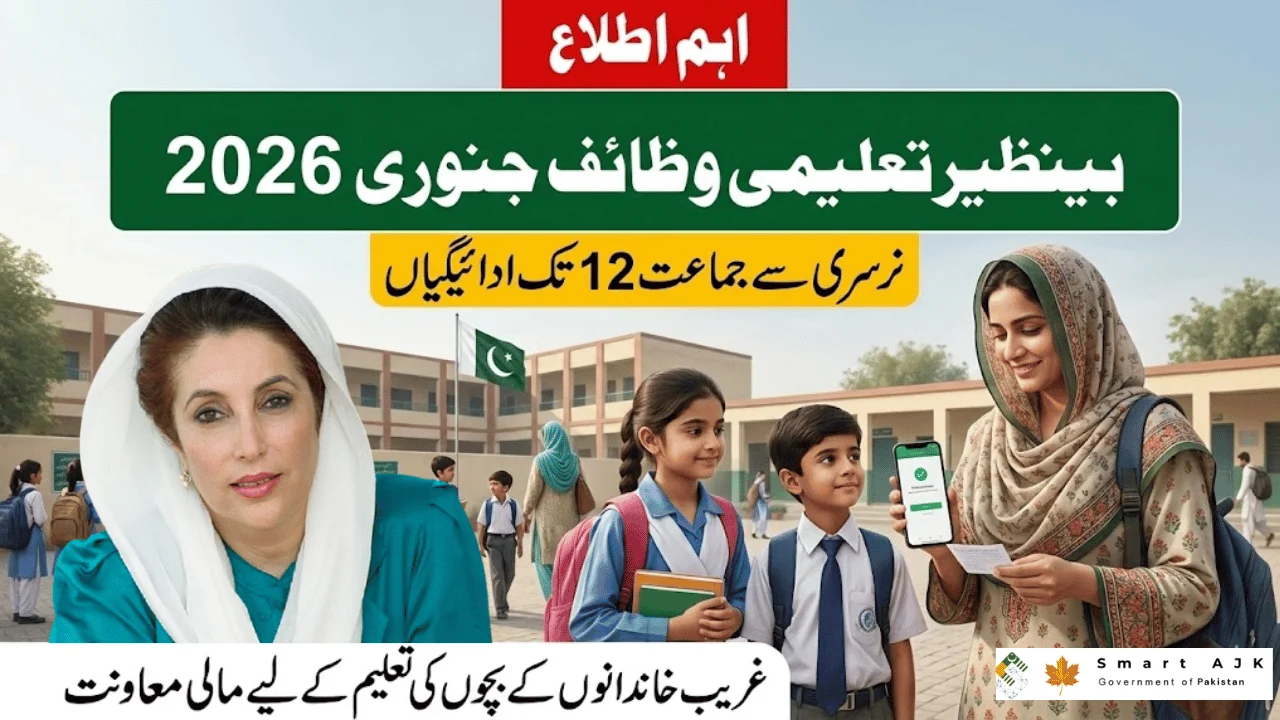
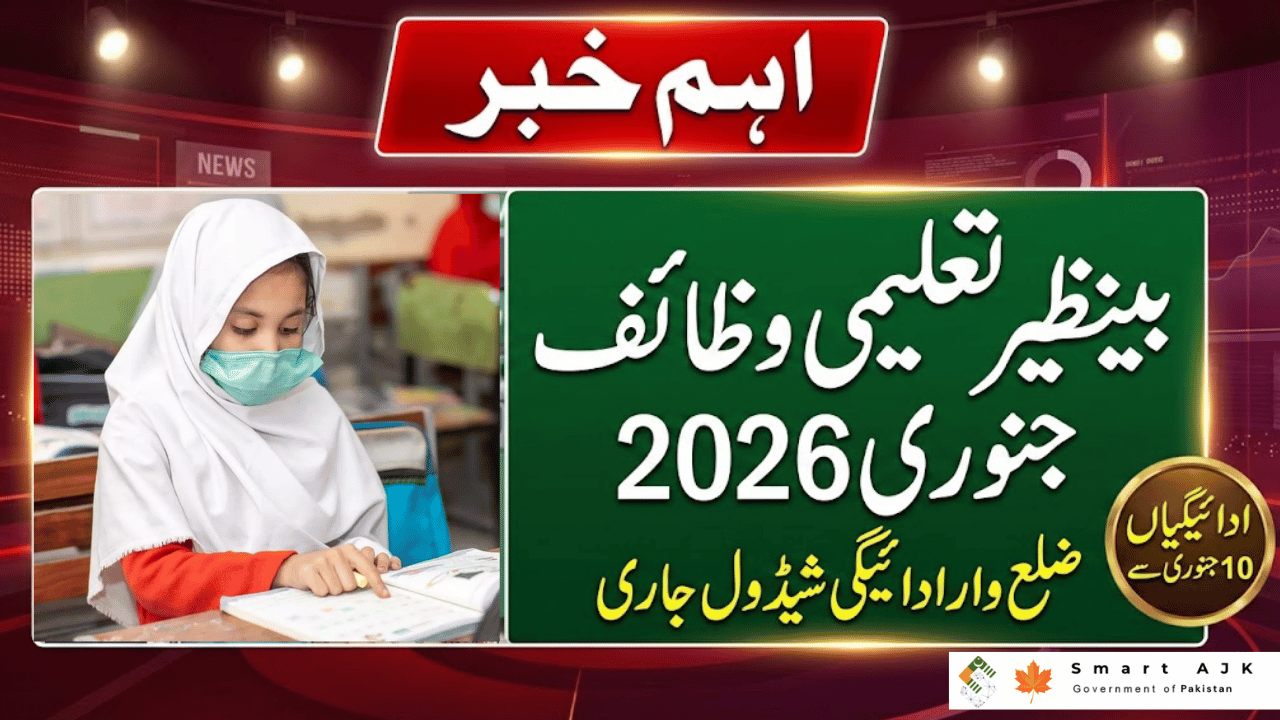
For millions of low-income households across Pakistan, keeping children in school is not just a matter of motivation—it’s a financial struggle that repeats every academic year. Uniforms, books, transport, and examination fees quietly add up, often forcing parents to make painful choices. The January 2026 installment of the Benazir Taleemi Wazaif addresses this pressure at a critical point in the school calendar.
This education stipend, linked with the Benazir Income Support Programme (BISP), is designed to help children remain enrolled from early schooling through higher secondary education. Below is a clear, practical breakdown of how the January 2026 payments work, who qualifies, and why this cycle matters.
What the Benazir Taleemi Wazaif Program Actually Does
Benazir Taleemi Wazaif is a conditional cash support scheme that encourages school attendance among children from financially vulnerable families. The stipend is issued through mothers who are already active BISP beneficiaries, ensuring that education-related funds reach households most likely to spend them on schooling needs.
In real-world terms, this support doesn’t replace family responsibility—it reduces risk. It helps parents absorb routine education costs so children are less likely to miss classes or drop out altogether.
The program focuses on:
-
Sustained school enrollment
-
Regular attendance
-
Lower dropout rates, particularly among girls
-
Educational continuity from nursery to class 12
January 2026 Payment Cycle: Why Timing Matters
The January release is strategically important. After winter holidays, families often face renewed expenses—fresh notebooks, school dues, transport adjustments, and exam-related costs. For households living month to month, this payment often determines whether a child returns to school on time.
This installment helps families:
-
Cover immediate academic expenses
-
Avoid pulling children out of school temporarily
-
Maintain stability during the mid-academic year
Who Is Eligible for the January 2026 Stipend
Eligibility is straightforward and tied to transparency:
-
The child’s mother must be an active BISP beneficiary
-
The child must be enrolled in a recognized public or private school
-
Attendance requirements set by the program must be met
Coverage extends from nursery through higher secondary education, making this one of the few long-term education support systems in the country.
Education Levels Covered Under Taleemi Wazaif
The stipend structure reflects how education costs rise as children progress through school.
Primary Education (Nursery to Primary)
Early education lays the foundation for literacy and learning habits. Financial stress at this stage often leads to early dropouts, especially in disadvantaged communities. The stipend helps families manage basic schooling needs, with higher support allocated for girls to encourage early enrollment.
Secondary Education (Middle to Matric)
This stage sees higher dropout rates due to rising costs and social pressures. Increased financial support at this level helps families keep children—especially girls—in school through matriculation.
Higher Secondary Education (Intermediate)
Intermediate education is often the most financially challenging before university or vocational training. The program provides its highest stipend here, recognizing the long-term value of completing class 12.
January 2026 Stipend Amounts at a Glance
| Education Level |
Girls (PKR) |
Boys (PKR) |
| Primary |
2,500 |
2,000 |
| Secondary |
3,500 |
3,000 |
| Higher Secondary |
4,500 |
4,000 |
Additional Incentive:
A one-time bonus of PKR 3,000 is awarded upon completion of primary education to encourage families to ensure children finish early schooling.
Why the Primary Completion Bonus Is Important
Early dropout has long-term consequences. The primary completion bonus acts as both financial support and a behavioral nudge, encouraging parents to keep children enrolled until they complete foundational education. This incentive has been linked to better transitions into middle school and stronger parental commitment to education.
How BISP Strengthens Education Support
By integrating education stipends within BISP, the government has created a system that is easier to monitor and harder to misuse. Linking payments to attendance and enrollment improves accountability while keeping women at the center of household education decisions.
This structure ensures:
-
Targeted assistance for deserving families
-
More reliable fund distribution
-
Sustainable, long-term education support
Bottom Line
The Benazir Taleemi Wazaif January 2026 payments are more than routine disbursements. For many families, they are the difference between continued schooling and forced withdrawal. By supporting children from nursery through class 12 and prioritizing girls’ education, the program plays a meaningful role in breaking the cycle of poverty through learning—one academic year at a time.