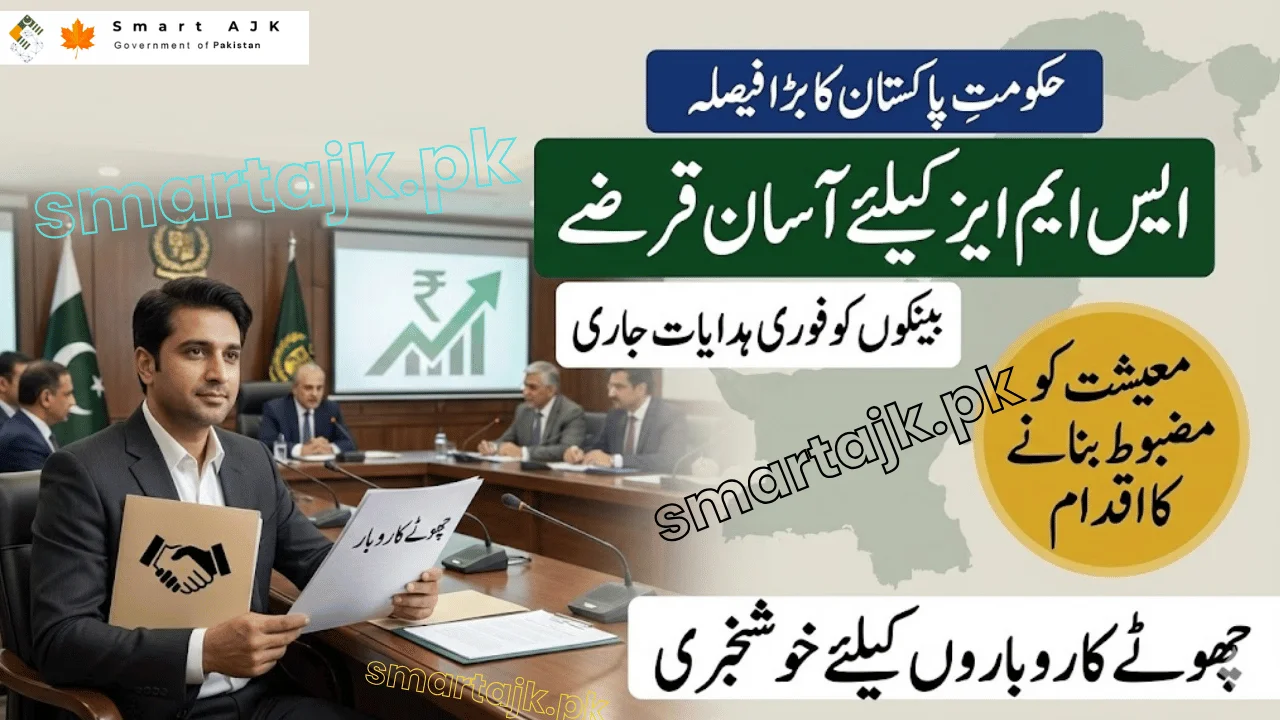
The Government of Pakistan has taken a major step to strengthen the national economy as Prime Minister Shehbaz Sharif directed banks and financial institutions to provide easy loans to Small and Medium Enterprises (SMEs). The decision aims to unlock the growth potential of small businesses, boost exports, and create employment across the country in 2026.
The directive was issued during a high-level meeting on the business plan of Small and Medium Enterprises Development Authority (SMEDA), where a comprehensive roadmap for SME development was presented.
Why Easy SME Loans Matter for Pakistan’s Economy
SMEs are widely regarded as the backbone of Pakistan’s economy, contributing significantly to employment, domestic production, and innovation. However, limited access to financing has long been a major hurdle for small businesses.
Prime Minister Shehbaz Sharif emphasized that:
-
SMEs play a central role in economic stability
-
Expanding SME financing can significantly increase exports
-
Supporting small businesses will help reduce unemployment
The government’s renewed focus on easy loans is expected to improve cash flow, expand production, and modernize operations for thousands of businesses.
Three-Year SME Roadmap Unveiled
During the meeting, officials presented a three-year roadmap designed to promote SMEs at both national and international levels. The prime minister appreciated the efforts of Haroon Akhtar and the newly elected SMEDA Board for preparing a practical and results-oriented strategy.
Key Focus Areas of the Roadmap:
-
Easier access to bank financing
-
SME integration into national and global export markets
-
Capacity-building through training and workshops
-
Collaboration with international partners
-
Encouraging innovation and competitiveness
Banks Directed to Improve SME Financing
The prime minister instructed relevant authorities to accelerate coordination with banks and financial institutions so that SME loans are offered on simpler terms, with reduced procedural hurdles.
The role of the State Bank of Pakistan (SBP) was highlighted in ensuring that:
-
SME-friendly lending policies are implemented

-
Banks actively support small businesses
-
Credit access is expanded beyond major cities
Training, Workshops, and Global Market Access
The meeting was informed that:
-
SME capacity-building workshops have been conducted in six major cities
-
Specialized training programs are underway to prepare SMEs for global competition
-
Pakistan is enhancing cooperation with other countries to help local SMEs enter international markets
These initiatives aim to make Pakistani SMEs more competitive, export-ready, and sustainable.
Special Focus on Women in SMEs
An important part of the discussion was women’s participation in the SME sector. The government reaffirmed its commitment to:
-
Increase women-led businesses
-
Provide training and financial support to female entrepreneurs
-
Ensure inclusive economic growth
This focus aligns with broader national goals of women empowerment and financial inclusion.
Who Attended the Meeting?
The meeting was attended by senior leadership, including:
-
Federal Minister for Information and Broadcasting Attaullah Tarar
-
Governor SBP Jameel Ahmad
-
Chief Secretaries of all provinces, AJK, and Gilgit-Baltistan
-
SMEDA Board members and senior officials
The wide representation reflects the national importance of SME reform.
What This Means for Small Businesses in 2026
For entrepreneurs and small business owners, this announcement signals:
-
Easier access to bank loans
-
Stronger government backing
-
Better chances to grow locally and internationally
-
Increased training and institutional support
SMEs can expect new financing schemes, improved banking cooperation, and supportive policies in the coming months.
Final Words
The directive by Prime Minister Shehbaz Sharif to provide easy SME loans in Pakistan (2026) marks a crucial step toward economic revival. By strengthening access to finance, promoting exports, and empowering women entrepreneurs, the government aims to unlock the true potential of Pakistan’s SME sector.
This article is published for informational and educational purposes only. nise.org.pk is not an official government website and is not affiliated with any government department. Readers are advised to verify all information from official sources before taking any action.